How Missouri Freeze-Thaw Cycles Damage Brick and Mortar
6 min readBy St. Peters Masonry
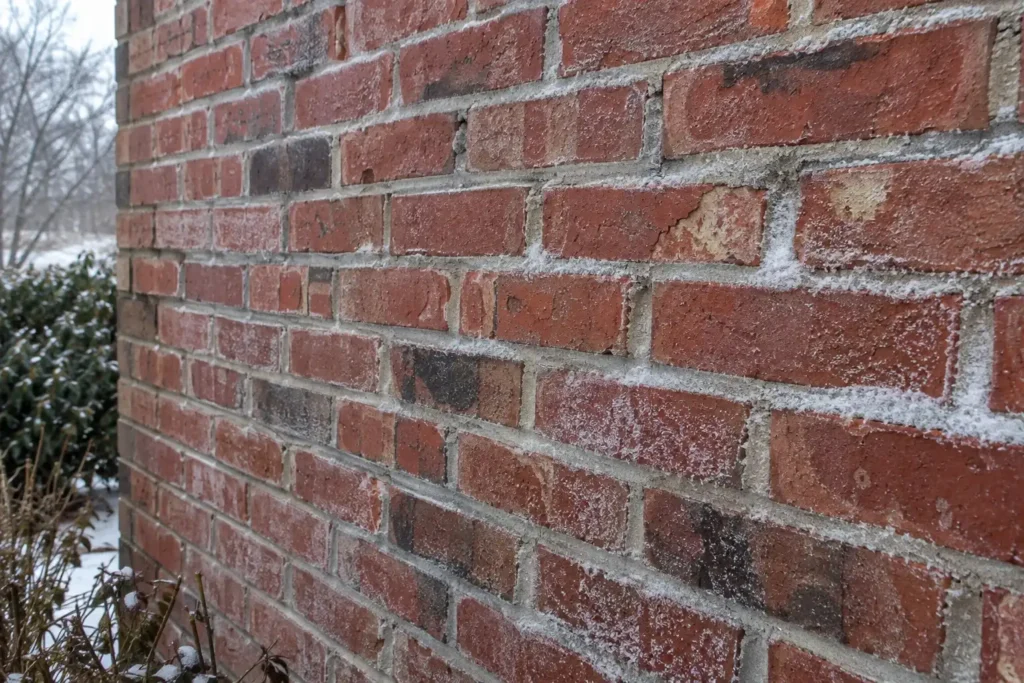
Brick and mortar absorb water. When that water freezes, it expands, and eastern Missouri winters repeat that cycle again and again.
How freeze-thaw works
Brick, mortar, and stone are porous. Rain and melting snow soak in, and when the temperature drops below freezing, that water turns to ice and expands. When it thaws, more water gets into the space the ice opened up. Each cycle widens cracks a little more.
Winters in eastern Missouri often swing above and below freezing many times, so masonry here goes through a lot of these cycles.
Where damage shows up first
Chimney tops
The most exposed masonry on the house, see chimney repair.
Walls wetted every day all summer go into winter damp.
Signs after winter
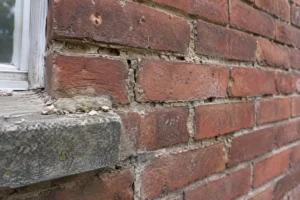
Brick faces flaking or popping off (spalling)
New cracks or wider cracks in mortar
Sandy grit at the base of walls
White efflorescence staining
Crown cracks on the chimney
Why the wrong mortar makes it worse
Mortar should be the weaker, more breathable part of the wall so moisture can escape through the joints. When a wall is repointed with mortar harder than the brick, water has to leave through the brick instead, and that’s where freeze-thaw does its damage.
That’s why mortar matching matters in tuckpointing, especially on older brick.
How to reduce freeze-thaw damage
Clean gutters before winter and extend downspouts away from walls
Keep sprinklers off brick
Grade soil away from the foundation
Fix chimney crowns and wall caps before winter
Use sand, not de-icing salt, on masonry steps
Avoid sealing brick with non-breathable coatings
When to repair
Spring is the time to inspect and fall is the time to fix, so repairs cure before the next winter. Mortar work shouldn’t be done below about 40°F. If you spot damage, see masonry & brick repair.