
Preserved
Sound original brick and stone stay. Keeping original material is the point of restoration: it’s usually the best match, and older brick made the way it was can’t be bought new.
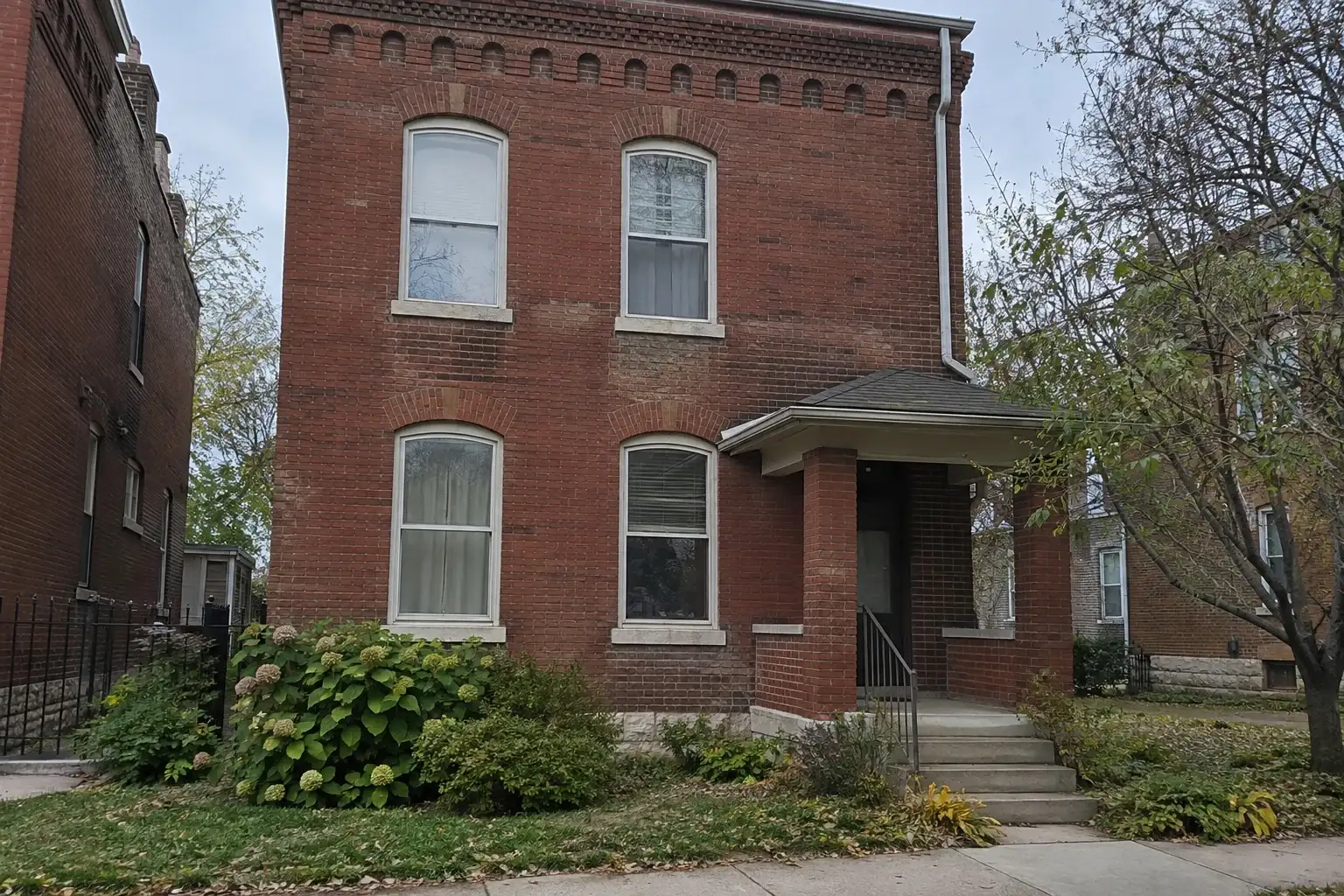
Masonry restoration
Restoration is a coordinated plan to bring aging brick and stone back to sound condition and a consistent appearance, using methods and materials that respect how the wall was built.
Repair fixes a specific defect; restoration looks at the whole structure. It typically combines an assessment, careful cleaning, repointing, brick or stone replacement, and sometimes rebuilding chimneys, parapets, or wall sections, sequenced so each step supports the next.
Restoration makes the most sense for older homes and buildings, walls with several problems at once, or owners who want the masonry to look and perform as a whole again rather than as a patchwork of repairs. Not sure which you need? Read masonry repair vs. restoration.
Sound original brick and stone stay. Keeping original material is the point of restoration: it’s usually the best match, and older brick made the way it was can’t be bought new.
Deteriorated mortar is carefully removed and the joints are repointed with a compatible mortar, matched to the original in strength, color, texture, and joint profile.
Brick or stone that is badly spalled, cracked through, or crumbling is replaced one unit at a time, ideally with salvaged material of the same age.
Poor earlier repairs, such as hard cement patches, mismatched brick, or non-breathable coatings, are removed where they’re causing damage. Restoration often spends as much effort undoing old repairs as making new ones.
Work doesn’t have to happen all at once. Water entry and loose masonry come first; cleaning and cosmetic work can follow in later phases, depending on the condition of the building and your budget.
Deteriorated mortar across multiple elevations, not one spot.
Many eroded or flaking bricks, especially lower on the wall.
Old patches in mortar or brick that don’t match.
Dirt, biological growth, or paint that’s trapping moisture.
Deteriorated chimneys, parapets, arches, or decorative brick.
Damp plaster, stains, or musty rooms behind masonry walls.
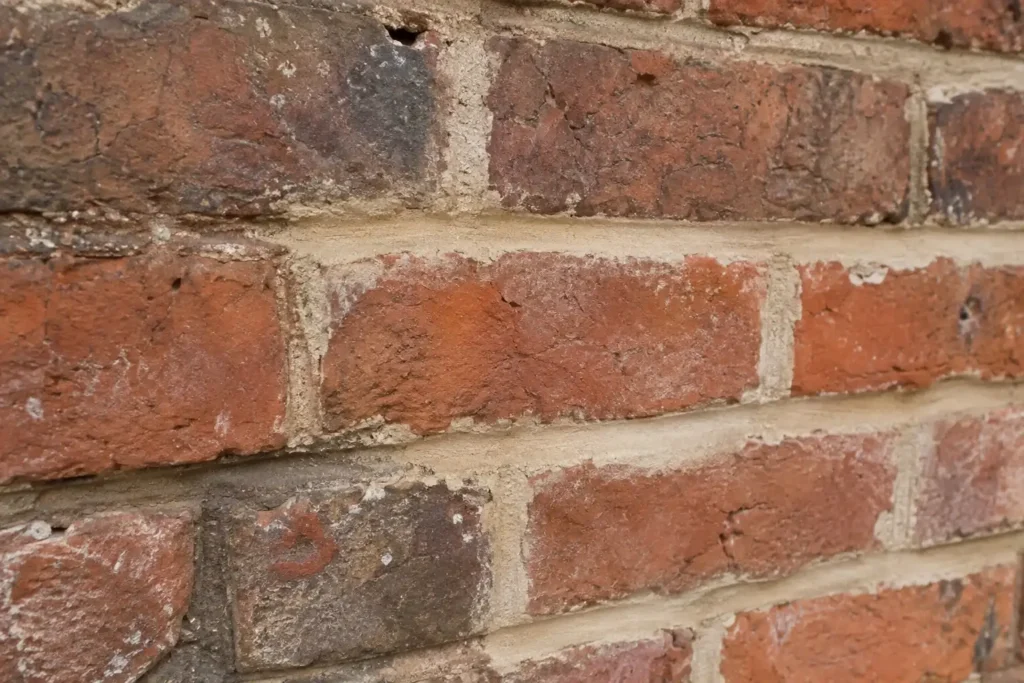
Brick made before the mid-20th century is often softer and more porous than modern brick, and it was laid in lime-based mortar that lets moisture evaporate through the joints. Repointing that brick with hard, cement-rich mortar traps moisture in the brick and forces stress into its face, one of the most common causes of spalling on older homes.
Restoration uses mortars that are compatible in strength, permeability, and appearance, so the joint stays the sacrificial part of the wall. The same thinking applies to cleaning: the gentlest method that works.
Each elevation is documented and the causes of deterioration identified.
Urgent structural and water issues first, cosmetic work after, phased if the budget needs it.
Test patches first, then the lowest-pressure method that works.
Joints are raked out and repointed with a mortar matched to the brick.
Damaged brick or stone is replaced; chimneys, parapets, or sections rebuilt where needed.
Water-management fixes and a simple maintenance plan.
The wrong cleaning method can do more damage in an afternoon than decades of weather.
Removes most dirt and biological growth.
Best for: The default starting point.
Targeted products for specific stains and efflorescence.
Best for: Stubborn stains, after a test patch.
Chemical strippers suited to masonry, tested first.
Best for: Painted brick being returned to natural.
Sandblasting, high-pressure washing, and harsh acids strip the brick’s fired face.
Best for: Never on older brick.
Paint on old brick can trap moisture, especially when it’s a modern film-forming paint over soft brick. Signs of trouble are paint blistering, brick flaking under the paint, and damp patches inside.
Stripping is slow and has to be tested first, because some brick was painted to protect a soft or patched surface. Sometimes the better answer is to keep the paint and switch to a breathable masonry coating once the wall is repaired. We’ll test a small area before recommending either.
The parts of a building that stick out get the most weather: chimneys above the roof, parapet walls along the roof edge, and brick arches over windows. These are often the first features that need rebuilding rather than repair.
Rebuilding is done by taking the brick down to sound masonry, saving and cleaning what can be reused, and relaying it with matching mortar and the original bond pattern. See chimney repair for chimney-specific work.
Some neighborhoods in the region are local historic districts, including parts of St. Charles, University City, and the City of St. Louis. In those districts, exterior masonry work may need review before it starts: by the Landmarks Board in St. Charles, the Historic Preservation Commission in University City, and the Cultural Resources Office in St. Louis.
If your home is in one, check first. We can provide a description of the proposed work, materials, and mortar for the review.
A restored wall with compatible mortar and good water management can go decades before needing major work again. Periodic maintenance is part of the plan: checking joints, keeping water off the wall, and fixing small failures early.
Replace crumbling, recessed mortar joints with mortar matched to your brick.
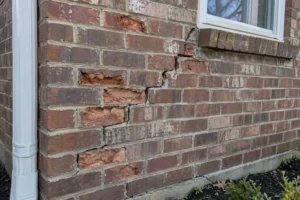
Fix cracked, spalling, and loose brick, block, and stone, and the cause behind it.
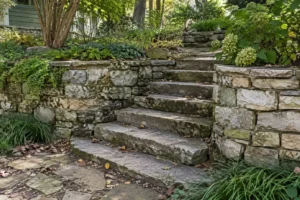
Natural and manufactured stone walls, steps, pillars, and veneer, new and repair.
Especially relevant in:St. CharlesUniversity CitySt. LouisFlorissant
Per project, usually, since it covers more. But one planned project often costs less than years of repeated spot repairs on the same wall.
Yes. Urgent water and structural issues go first; cosmetic work can follow in later phases.
No. Sandblasting and high-pressure washing remove the hard fired face of the brick and speed up deterioration.
Where the brick calls for it. Older, softer brick is repointed with softer, more breathable mortar.
Possibly. St. Charles, University City, Florissant, and the City of St. Louis all review some exterior work in their local historic districts. Check with your city before scheduling work.
Age is the first clue: brick from before the mid-1900s is often softer. On the wall, soft brick tends to have rounded, worn edges, a sandy surface, and old mortar you can scratch with a key. We check before choosing mortar.
Often, yes, using masonry-safe strippers after a test patch. Some brick shouldn't be stripped, and we'll tell you if yours is one of them.
The fastest way to get answers is a phone call. Mon to Sat, 8 AM to 6 PM · Sun, 10 AM to 2 PM
For the quickest answer, call (669) 326-4536. Otherwise, leave your details and we’ll get back to you.