
Masonry & brick repair
Masonry & Brick Repair in St. Peters, MO
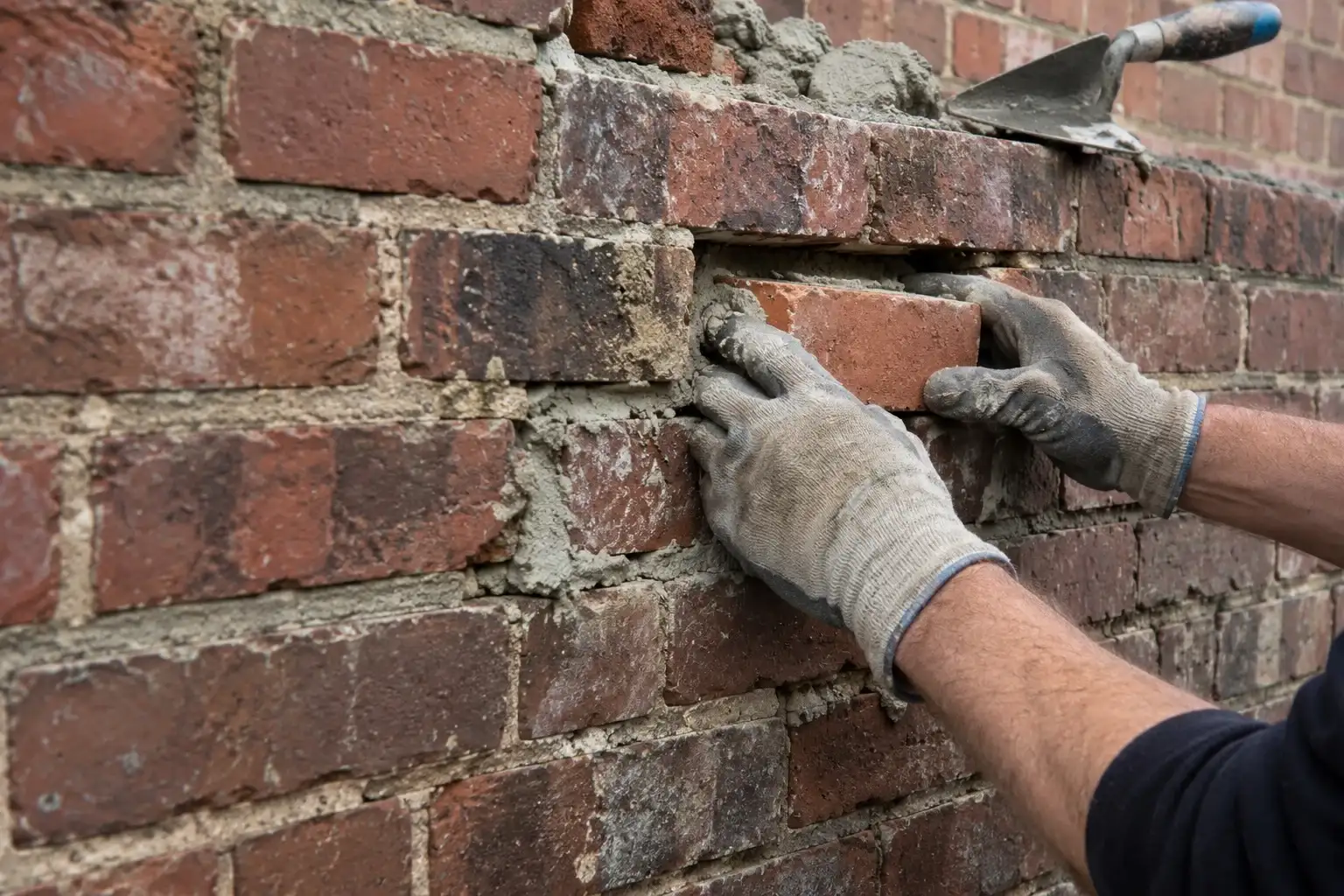
Cracked, spalling, or loose brick is more than a cosmetic problem. We find the cause, repair or replace damaged brick, block, and stone, and blend the repair into the wall.
What masonry repair covers
Masonry repair fixes specific damage to existing brick, concrete block, or stone: a cracked section, a handful of spalled bricks, a loose step, a failing wall cap. It’s targeted work. We repair what’s broken and deal with why it broke.
If the problem is the mortar between the bricks rather than the bricks themselves, the fix is usually tuckpointing. If an older wall needs a coordinated plan across many problems, see masonry restoration.
Common types of brick and masonry damage
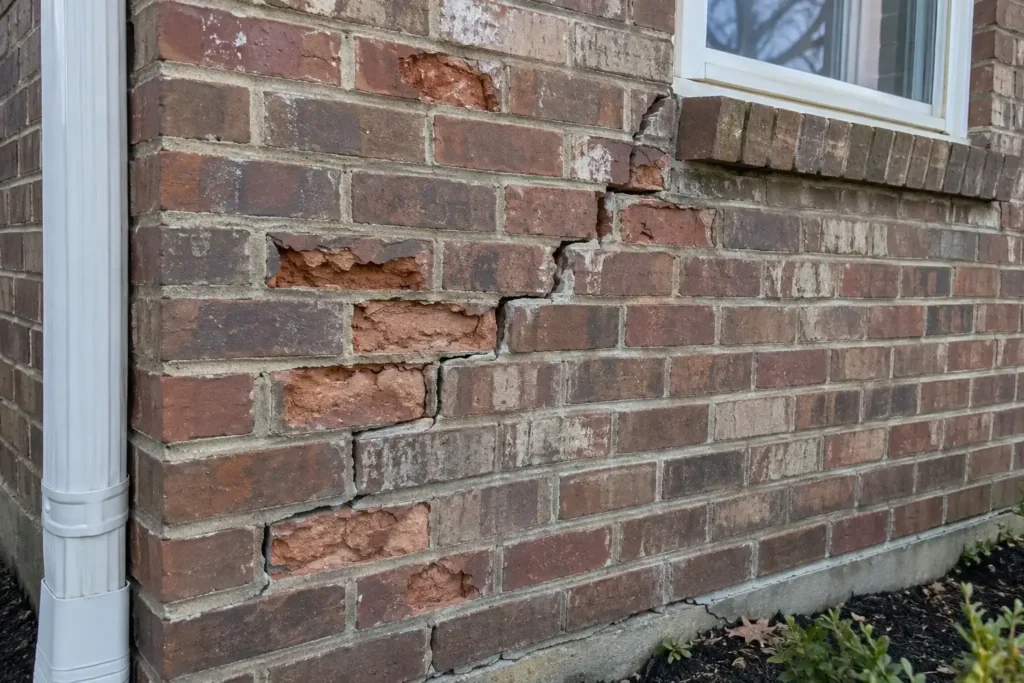
Spalling brick
The brick face flakes, pops off, or crumbles, usually trapped moisture freezing.
Stair-step cracks
Diagonal cracks following the mortar joints, often from settlement or movement.
Cracks through brick
Can point to expansion, rusting steel lintels over openings, or structural stress.
Loose or missing brick
Common on steps, wall caps, and around windows.
Bulging or leaning sections
The wall is moving out of plane and should be assessed promptly.
Staining and efflorescence
Water is moving through the masonry and will keep causing damage.
What causes brick to spall and crack
Spalling happens when water gets into brick, freezes, and expands just below the surface. Over repeated freeze-thaw cycles, the face shears off. Hard, cement-rich mortar makes it worse: when the joint is stronger than the brick, stress moves into the brick instead of the joint. More on that in how freeze-thaw damages masonry.
Cracks have more possible causes, normal settlement, soil movement, tree roots, rusting steel lintels, missing expansion joints, or impact. Part of every repair is working out which one you’re dealing with, because repairing a crack without addressing its cause usually means seeing it again.
Cracks above windows and garage doors
Brick over a window, door, or garage opening sits on a steel angle called a lintel. When paint on that steel fails and it starts to rust, the steel swells and pushes the brick above it. The result is a crack that starts at the corner of the opening and climbs, or a lintel edge that looks swollen and flaky.
Repointing that crack won’t hold. The lasting fix is to remove the brick above the lintel, clean and coat the steel or replace it, add flashing, and relay the brick. On brick veneer houses this ties into the flashing and weep holes covered on brick veneer repair.
Finding brick that matches
Brick sizes and colors have changed over the decades, and even two batches from the same plant can differ. For small repairs we often borrow brick from a hidden spot, such as behind a deck or inside a garage wall, and fill that spot with a close new brick where nobody will notice.
For larger areas we compare samples from brick suppliers against your wall in daylight, wet and dry. New brick looks cleaner at first; it tones down as it weathers.
What to expect during masonry repair
Initial assessment
We look at the damaged area and the wall around it, inside and out where it matters.
Identify the cause
Water, movement, the wrong mortar, or a rusting lintel: the cause decides the repair.
Decide what to repair or replace
Some brick can stay and be repointed; some needs to come out. You’ll know which and why.
Match the materials
Brick is matched for size, color, and texture, and mortar for strength and color.
Perform the repair
Damaged units are cut out, new brick is set, and joints are tooled to match. The cause gets fixed too.
Clean up and final check
Residue is cleaned off and we walk through the finished repair with you.
Repair options for different problems
Brick replacement
Individual damaged bricks cut out and replaced.
Best for: Spalled, cracked, or broken bricks.
Crack repair & repointing
Raking out and repointing along a crack.
Best for: Stable cracks that follow mortar joints.
Partial rebuild
Taking down and relaying a section on a sound base.
Best for: Bulging or loose sections, wall caps, steps.
Block & stone repair
The same approach for concrete block and stone.
Best for: Above-grade block walls, stone features.
Steps, stoops, and walkways
Brick and stone steps take foot traffic, de-icing salt, and standing water, so they often fail before the house does. Loose treads, cracked risers, and heaved pavers can be reset and repointed; badly deteriorated steps may need a partial rebuild on a sound base.
When a crack needs more than a mason
Most cracks are stable and repairable. But wide cracks that keep growing, walls that bulge or lean, doors and windows that suddenly stick, and horizontal cracks in block foundation walls can point to structural movement. In those cases we’ll recommend a structural engineer’s assessment before masonry repair. We don’t offer foundation stabilization.
For walls that hold back soil, see retaining walls; for new walls, see brick & block wall construction.
How long brick repairs last
A replaced brick set in compatible mortar can last as long as the wall around it, as long as the cause of the damage has been dealt with. Repairs that only patch over a water problem or active movement are the ones that fail early, which is why diagnosis comes first.
What affects the cost of masonry repair
- Number of damaged bricks or size of the area
- How easy it is to find a matching brick
- Height and access
- Whether the cause needs separate work (drainage, lintels)
- Mortar matching
- Engineering or permits, if the work is structural
Preventing future damage
- Keep gutters and downspouts clear and discharging away from walls
- Keep soil and mulch graded away from the house
- Use sand rather than de-icing salt on brick and stone steps
- Avoid non-breathable sealers and paints on brick
- Trim plants and vines back from walls
- Look over the masonry after each winter
Related guide
Repair or restoration?
If your home has many problems at once, or older, softer brick, this guide will help you decide.
Related services
Tuckpointing & Repointing
Replace crumbling, recessed mortar joints with mortar matched to your brick.
Masonry Restoration
A coordinated plan for aging and historic brick and stone, done with compatible materials.
Brick Veneer Repair & Installation
Fix bowing, cracked, or leaking brick siding; install new veneer and thin brick.
Questions about brick repair
Can you match my existing brick?
Usually closely. We look for new brick with the right size, color, and texture, or use salvaged brick for older homes. A perfect match isn't always possible, so replacements are often placed where they blend best.
Is spalling brick dangerous?
Usually not immediately, but it gets worse each winter and lets water deeper into the wall. Spalling on chimneys and steps should be dealt with sooner, because pieces can fall or trip someone.
Should I worry about stair-step cracks?
Small, stable stair-step cracks are common and repairable. If they're wide, growing, or appear with sticking doors and windows, have them assessed (sometimes by an engineer) before repair.
Can cracked brick be repaired without replacing it?
Cracks along mortar joints can often be repointed. Bricks that are themselves cracked through or spalled are usually replaced.
Do you repair concrete block?
Yes, above-grade block walls and block features. Structural foundation stabilization is referred to specialists.
Can you replace just one or two bricks?
Yes. Single bricks are cut out and replaced all the time. The trick is matching the brick and mortar so the repair doesn't stand out.
Why do the bricks near my downspout keep falling apart?
They stay wet. A downspout that dumps water at the base of the wall, or splashback from a patio, keeps those bricks saturated through freeze-thaw cycles. Fix the water first, then replace the damaged brick.
Questions about brick repair? Call and talk to a mason.
The fastest way to get answers is a phone call. Mon to Sat, 8 AM to 6 PM · Sun, 10 AM to 2 PM
Prefer to write? Send a message
For the quickest answer, call (669) 326-4536. Otherwise, leave your details and we’ll get back to you.
Hours
Mon to Sat, 8 AM to 6 PM
Sun, 10 AM to 2 PM
Mon to Sat, 8 AM to 6 PM
Sun, 10 AM to 2 PM