
Stone steps
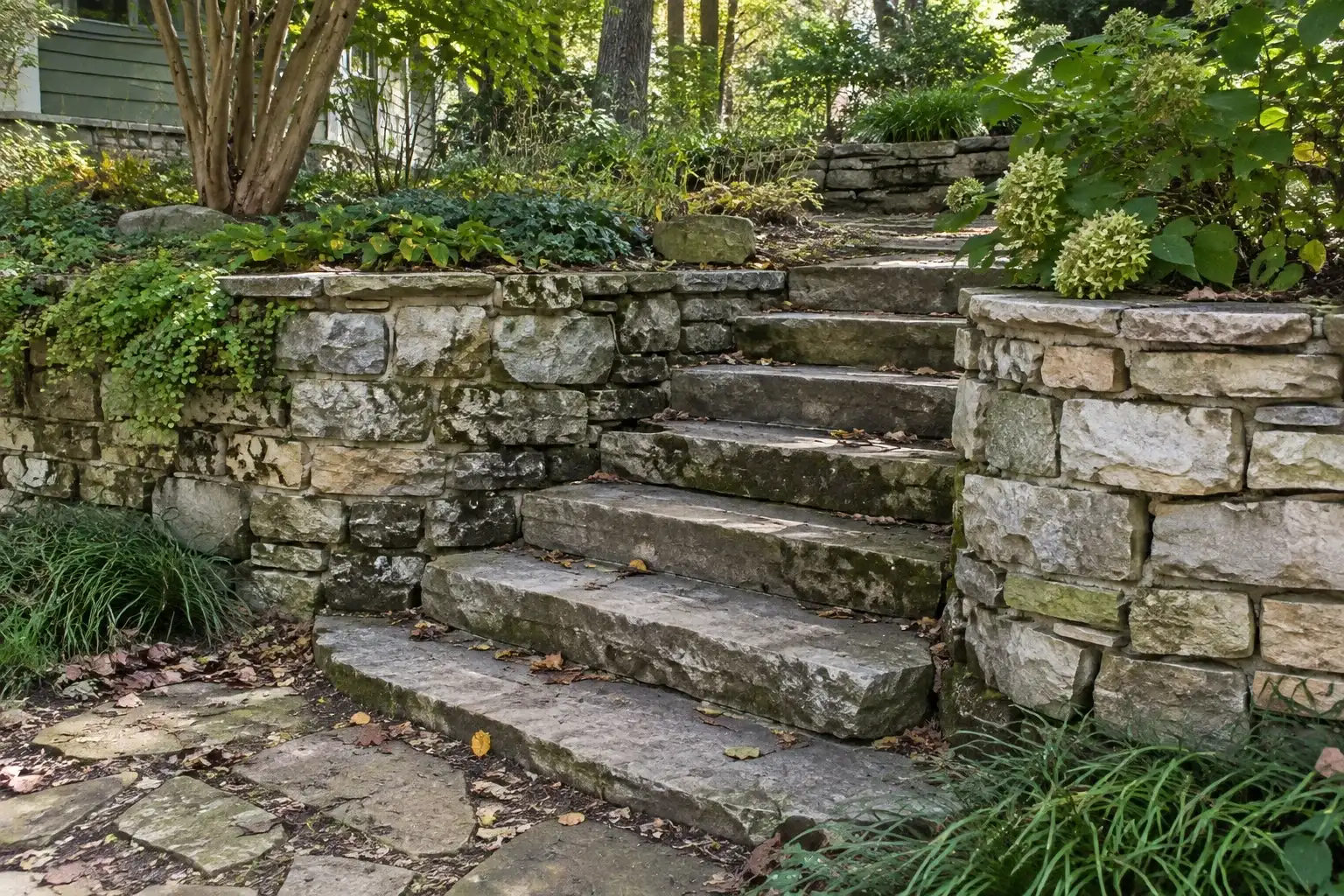
Natural stone treads and risers for entries, slopes, and garden paths. Each step sits on a compacted base and is pitched slightly so water runs off instead of pooling.
Stone masonry
Natural and manufactured stone for walls, steps, pillars, and home facades, plus repair and repointing of existing stonework.
Stone masonry is its own craft. Stone comes in irregular sizes and shapes, and each piece has to be selected and fitted. We build and repair freestanding stone walls, steps, pillars, and facade features, install and repair stone veneer, and repoint stone joints.
Walls that hold back soil are covered on retaining walls; freestanding brick and block walls on brick & block walls.
Natural stone treads and risers for entries, slopes, and garden paths. Each step sits on a compacted base and is pitched slightly so water runs off instead of pooling.
Low dry-laid or mortared stone walls around beds and patios. Dry-laid walls flex with the ground; mortared walls need a footing below the frost line.
Stone columns at driveways and walkways, built around a solid core and capped so water can’t soak in from the top.
Taller mortared stone walls on concrete footings, with through-stones or ties for strength and a cap that sheds water.
Natural or manufactured stone on house fronts, wainscots, and chimneys, installed over a drainage layer with clearance at the base. See the veneer section below.
Quarried limestone, fieldstone, or sandstone, heavy, durable, and unique.
Best for: Walls, steps, and features.
Real stone sawn to about an inch thick.
Best for: Facades wanting real stone without full-thickness weight.
Cast concrete made to look like stone, lighter and lower cost.
Best for: Facades and accents, installed with correct moisture detailing.
Stones fitted without mortar, relying on weight and batter (a slight lean back).
Best for: Low garden walls and informal settings. Flexes with frost.
Stones set in mortar on a concrete footing below frost depth.
Best for: Taller or more formal walls, pillars, and walls with caps.
Natural stone steps last a long time when each tread sits on a compacted base and is sized so it doesn’t rock. Most failures come from a base that washed out or settled, tree roots, or thin treads that cracked under load.
Resetting usually means lifting the stones, rebuilding the base with compacted gravel, and relaying them with a slight pitch so water runs off. Mortared steps and brick stoops are covered on masonry repair.
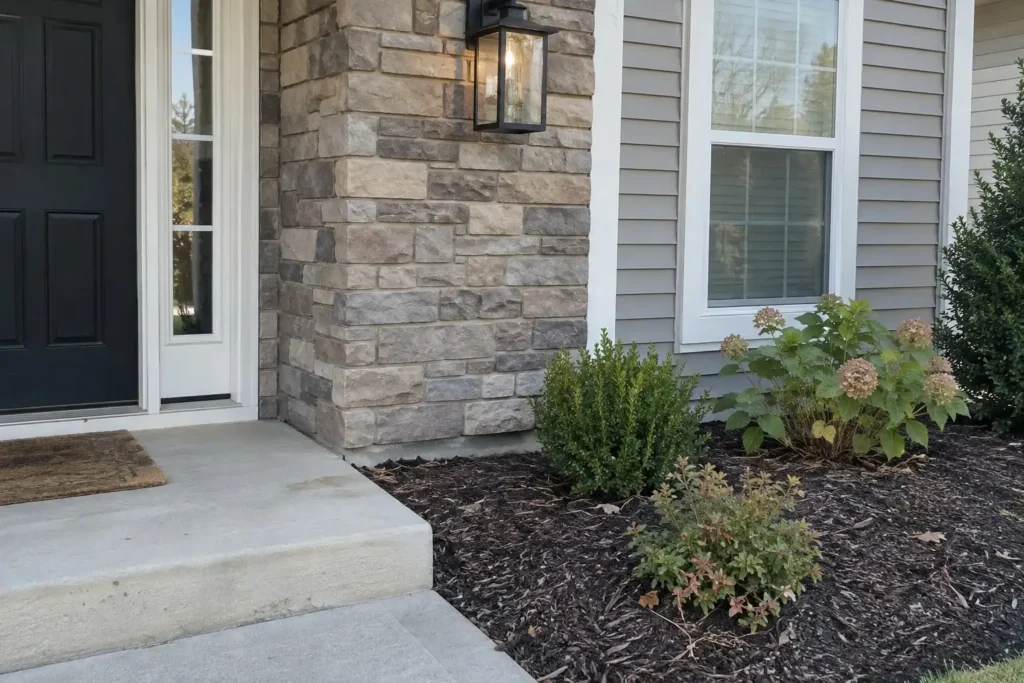
Stone veneer (natural or manufactured) is attached over a water-resistive barrier and lath, with a drainage path behind it and a weep screed at the base. When those details are missed, water gets trapped behind the stone and damages the sheathing out of sight.
Warning signs include loose or cracked stones, stained or crumbling joints, and stone set tight to the ground or roofing with no clearance. Brick-faced walls are a different system; see brick veneer repair.
Stone itself is durable, but the joints between stones and the base under them are not immune to weather. Water gets into mortar joints and cracks, freezes, and expands. After enough winters, joints open up and stones loosen, especially on wall tops and steps where water sits.
The base matters just as much. Soil that stays wet heaves when it freezes and settles when it thaws, which rocks steps and pushes walls out of line. Good drainage behind and under stonework, a cap that sheds water off the wall, and a base of compacted gravel all reduce that movement.
De-icing salt is hard on stone steps and the mortar around them. It speeds up freeze-thaw damage and can stain or scale softer stone. Sand or a salt-free traction product is a safer choice on stone and brick steps.
Especially on wall tops, steps, and pillar caps.
Mortar recessed, cracked, or falling out.
Through stones or running through the wall.
Treads that rock or have lifted.
Efflorescence or dark water staining.
Gaps opening between stone veneer and the wall.
Identify the stone type and find a match.
Footings or a stable base for walls and steps; proper backing for veneer.
Select and fit each piece for strength and appearance.
Mortar compatible with the stone type, tooled to suit the style.
Remove residue without harming the stone face.
Natural stone set in compatible mortar is among the most durable building materials; joints may need repointing after decades. The life of manufactured veneer depends heavily on how well it was installed and flashed.
New retaining walls and repair of leaning ones, with the drainage slopes demand.
Fix bowing, cracked, or leaking brick siding; install new veneer and thin brick.
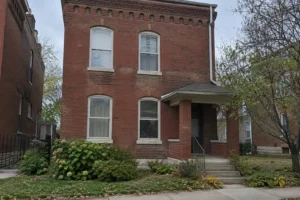
A coordinated plan for aging and historic brick and stone, done with compatible materials.
Especially relevant in:ChesterfieldWildwood
We'll find the closest available stone and blend new work into old. Manufactured stone profiles change over time, so an exact match isn't always available.
It's lighter and more affordable and looks convincing when installed well. Natural stone is more durable. Installation quality matters more than material for veneer.
It can mean water is getting behind the veneer. Have it checked before replacing stones, so the cause is fixed too.
Often, with the right attachment method and after checking the existing wall's condition.
Mortared stone walls do, below frost depth, or frost will crack the mortar. Low dry-laid walls sit on a compacted gravel base instead, since they can move slightly without damage.
Shade and moisture. It's mostly cosmetic, but it means the wall stays damp. Gentle cleaning and better drainage help. Avoid pressure washing.
The fastest way to get answers is a phone call. Mon to Sat, 8 AM to 6 PM · Sun, 10 AM to 2 PM
For the quickest answer, call (669) 326-4536. Otherwise, leave your details and we’ll get back to you.