
Brick veneer
Brick Veneer Repair & Installation in St. Peters, MO
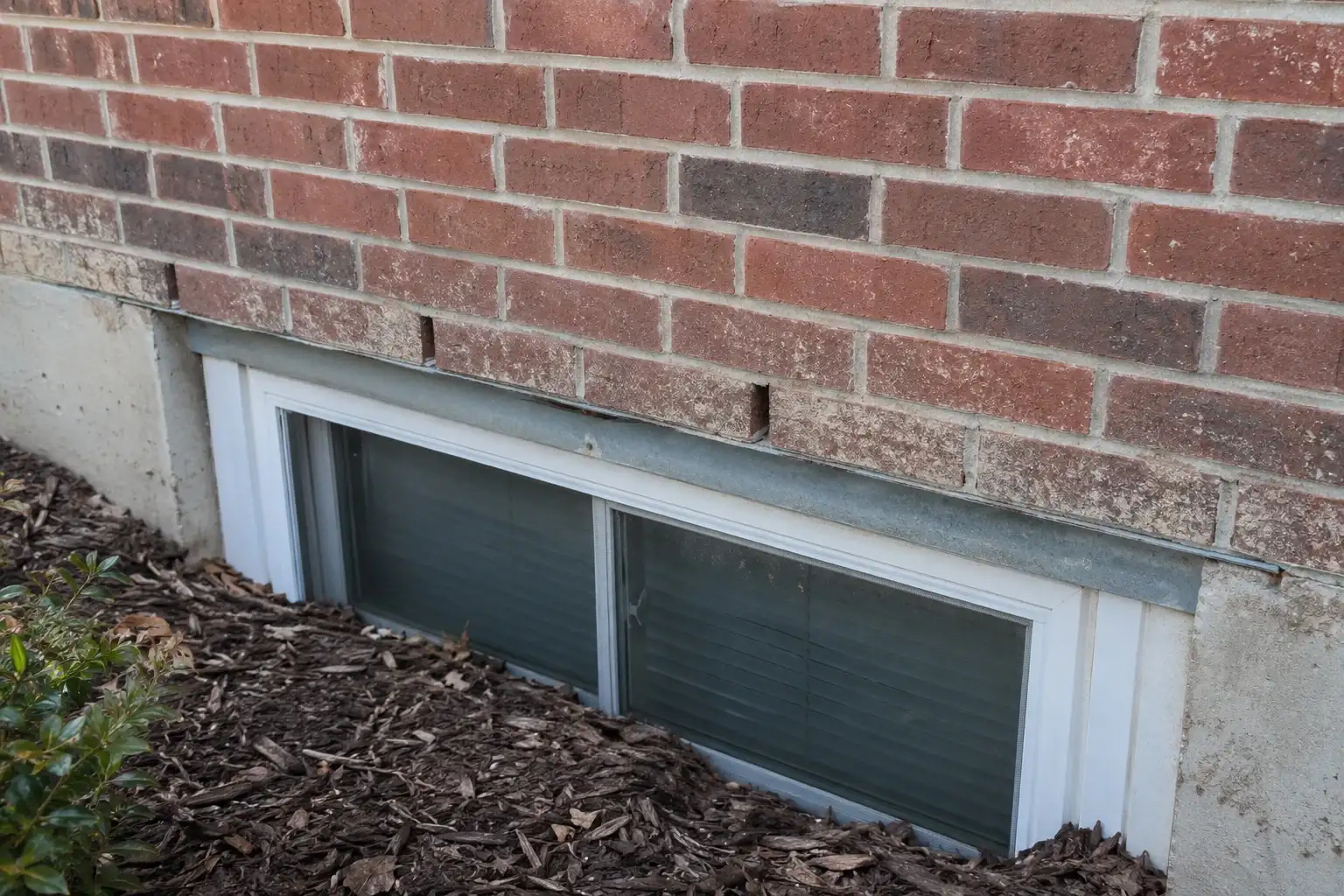
Most modern brick homes are brick veneer: a single layer of brick tied to a framed wall. We repair bowing, cracked, and leaking veneer, and install new brick veneer and thin brick.
Brick veneer vs. solid brick
In older homes, brick walls were often solid and structural, two or more layers thick. Most homes built in recent decades use brick veneer instead: one layer of brick, an air space, and metal ties fastening the brick to the wood-framed wall behind. The brick is the siding; the frame holds up the house.
That design works well as long as water that gets behind the brick can drain back out. Most veneer problems come from the details that manage that water.
Signs of brick veneer problems
Bowing or bulging
Brick moving out from the wall.
Cracks above openings
Often from rusting steel lintels over windows and garage doors.
Missing or blocked weep holes
No small gaps in the bottom course, or gaps mortared shut or buried.
Damage inside
Water stains or rot at the base of interior walls.
Separation at corners
Brick pulling away where it meets siding or trim.
Stair-step cracks
Diagonal cracking through the joints.
What goes wrong behind brick veneer
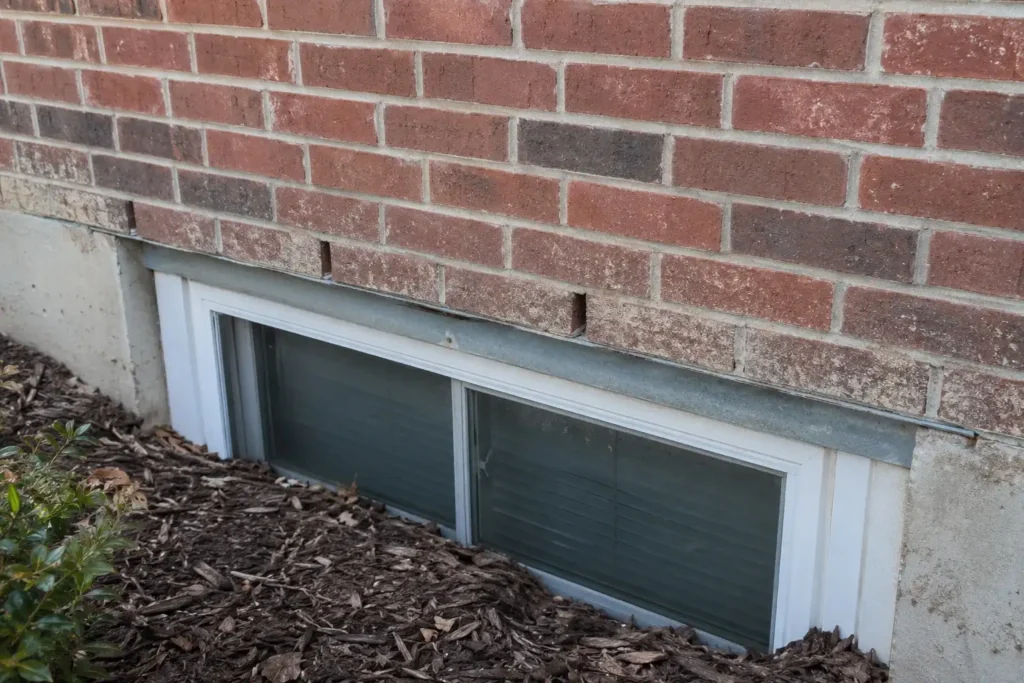
Weep holes (small gaps in the bottom course and above windows) let water drain from the air space. When they’re missing, mortared shut, or buried by mulch, water collects and wicks into the framing.
Metal wall ties can corrode or may never have been installed at the right spacing, letting brick bow. Steel lintels over openings rust and expand, cracking the brick above. And flashing at the base, windows, and roof lines may be missing or damaged.
Landscaping and the bottom course
The most common veneer problem is also the easiest to avoid: mulch, soil, or a raised flower bed piled up over the weep holes at the bottom of the wall. Once they’re buried, the cavity can’t drain.
Keep the ground a few inches below the lowest weep holes and slope it away from the house. If a bed was built against the brick, it may need to be pulled back.
Repair, rebuild, or new veneer
Targeted repair
Replace cracked brick, open weep holes, repoint.
Best for: Localized damage.
Section rebuild
Remove and relay brick with new ties, flashing, and weeps.
Best for: Bowing areas or missing flashing.
Lintel work
Treat or replace rusting steel lintels.
Best for: Cracks above windows and doors.
New veneer or thin brick
Full brick veneer for additions and re-siding; thin brick for accents and interiors.
Best for: Remodels and additions.
How veneer repair works
Inspect
Check ties, weeps, flashing, lintels, and inside for water damage.
Open up if needed
Remove brick in the problem area to see the cavity.
Fix the water details
Flashing, weeps, and ties corrected or added.
Relay and repoint
Reinstall or replace brick and repoint to match.
Veneer brick siding for additions and remodels
New brick veneer needs a foundation ledge or proper support, a water-resistive barrier, correctly spaced ties, flashing, and weep holes. Thin brick (brick slices around half an inch thick) adheres to a prepared wall and suits interiors, accent walls, and places that can’t carry full brick. For stone facades, see stone masonry.
How long brick veneer lasts
The brick itself can outlast the house. What limits veneer life is usually the hidden details, ties, flashing, and weeps. Fixed correctly, they can last as long as the brick.
What affects the cost of veneer work
- Size of the area
- Whether brick must be removed to fix ties or flashing
- Lintel condition
- Brick matching
- Interior water damage (handled by others)
Maintenance
- Keep weep holes open; never caulk them shut
- Keep mulch and soil below the bottom course
- Watch for rust stains and cracks at lintels
- Keep gutters working so water doesn’t sheet down the brick
Related services
Masonry & Brick Repair
Fix cracked, spalling, and loose brick, block, and stone, and the cause behind it.

Stone Masonry
Natural and manufactured stone walls, steps, pillars, and veneer, new and repair.
Tuckpointing & Repointing
Replace crumbling, recessed mortar joints with mortar matched to your brick.
Especially relevant in:O'FallonWentzville
Questions about brick veneer
Is my house brick veneer or solid brick?
Look at the brick pattern. Solid brick walls often show “header” bricks (short ends facing out) every few rows. Veneer usually shows only long sides.
Should weep holes be sealed?
No. They're there to let water out. Sealing them traps moisture behind the brick.
Is bowing brick veneer dangerous?
It can be if ties have failed over a large area. Have it assessed promptly.
What is thin brick?
Real or manufactured brick slices about half an inch thick, adhered to a wall instead of tied like full veneer.
Can you add brick to a house with vinyl siding?
Often, if the foundation can support it or a ledge can be added. It needs an assessment first.
How far apart should weep holes be?
Building codes typically call for weep holes no more than 33 inches apart, just above the flashing at the base of the wall and over openings.
Can I paint brick veneer?
You can, but paint needs upkeep and some paints trap moisture. If you do, use a breathable masonry paint and keep weep holes clear of paint.
Questions about brick veneer? Call and talk to a mason.
The fastest way to get answers is a phone call. Mon to Sat, 8 AM to 6 PM · Sun, 10 AM to 2 PM
Prefer to write? Send a message
For the quickest answer, call (669) 326-4536. Otherwise, leave your details and we’ll get back to you.
Hours
Mon to Sat, 8 AM to 6 PM
Sun, 10 AM to 2 PM
Mon to Sat, 8 AM to 6 PM
Sun, 10 AM to 2 PM