
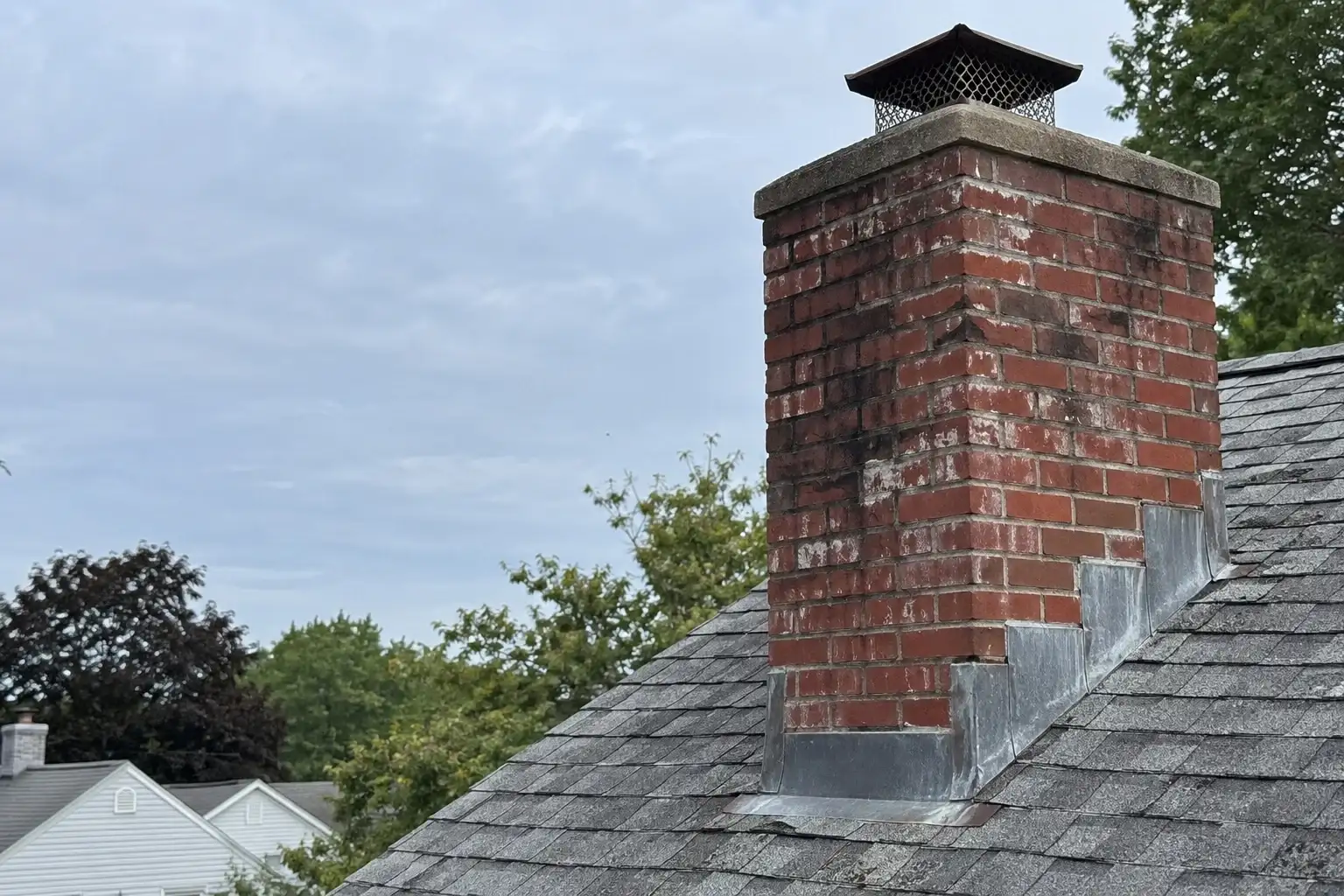
Chimney repair
Chimney Repair in St. Peters, MO
Chimneys stand above the roofline and take the worst of the weather. We repair chimney crowns, repoint and rebuild chimney masonry, and fix fireplace brickwork.
What chimney masonry repair covers
A chimney mason works on the structure: the brick or stone, the mortar joints, the crown on top, and the masonry of the fireplace below. That’s different from a chimney sweep, who cleans flues and inspects liners and venting.
Many chimney problems need both. We handle the masonry: brick, joints, crown, and cap. For flue cleaning and liner inspections, a chimney sweep is the right call, and we’ll tell you when one makes sense.
Signs your chimney needs repair
Cracked or crumbling crown
Visible cracks or broken edges on the slab at the top.
Missing mortar
Recessed or open joints, often worst near the top.
Spalling or loose brick
Brick fragments on the roof, in gutters, or in the firebox.
White staining
Efflorescence on the chimney, inside or out.
Water in the fireplace
Drips, rust on the damper, or a damp firebox after rain.
Stains near the chimney
Ceiling or wall stains beside the chimney inside the house.
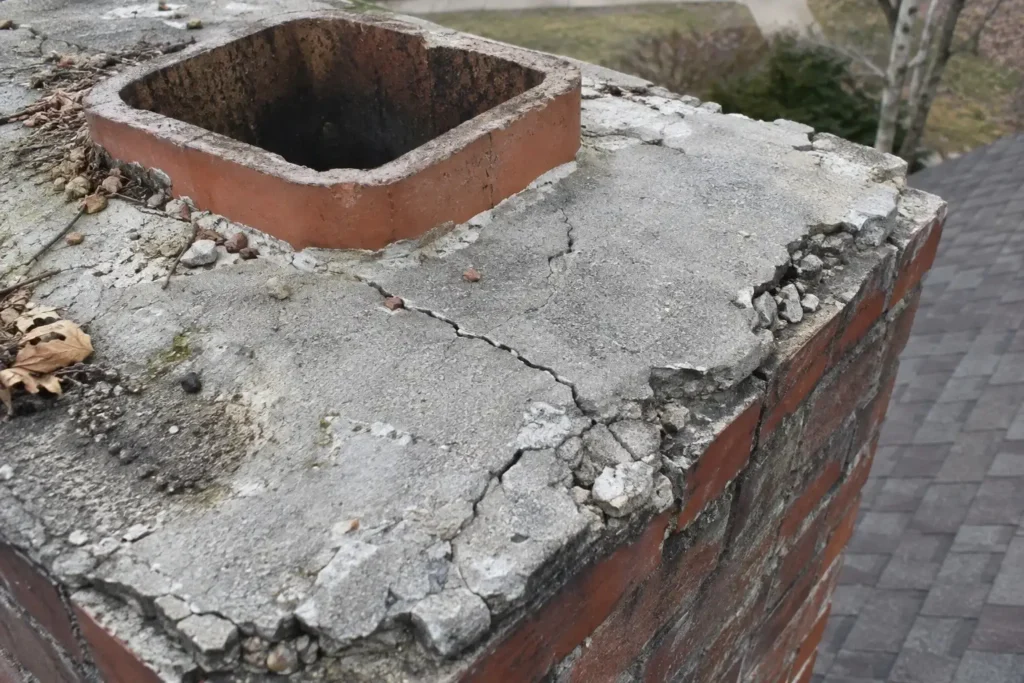
Chimney crown repair
The crown is the concrete or mortar slab that caps the top of the chimney around the flue. Its job is to shed water away from the brick below. Many crowns are built from ordinary mortar with no overhang, and they crack as they age. Once water gets through, it runs down inside the chimney masonry, where freeze-thaw cycles do the rest.
Small hairline cracks can be sealed with a flexible crown repair product. Wider cracks, crumbling edges, or crowns with no drip edge are usually better replaced with a properly formed crown that overhangs the brick.
Crown, cap, or flashing?
These get mixed up. People often search for “fireplace crown repair” when they mean the chimney crown.
Chimney crown
Masonry or concrete slab sealing the top of the chimney.
Best for: Keeping water out of the brick.
Chimney cap
A metal cover over the flue opening.
Best for: Keeping rain, animals, and debris out of the flue.
Flashing
Metal sealing the joint where the chimney meets the roof.
Best for: Roof-line leaks where the chimney meets the shingles.
What to expect during chimney masonry repair
Assessment
We inspect the chimney from the roof: crown, joints, brick, cap, and flashing, plus any signs of water inside.
Identify the problem
Is it the brick, the mortar, the crown, or the masonry around it? Often more than one.
Prepare the work area
Roof access is set up, and shingles, gutters, and landscaping below are protected from debris.
Complete the repair
Seal or replace the crown, repoint joints, replace spalled brick, or rebuild the top section.
Let materials cure
New mortar and crowns need time to cure; avoid lighting fires in the fireplace until we say it’s ready.
Afterward
Keep a cap on the flue, check the chimney each spring, and have a sweep look at the flue if you use the fireplace.
Partial or full chimney rebuild
When the brick above the roofline is loose, badly spalled, or leaning, patching it rarely holds. A partial rebuild takes the chimney down to solid masonry, usually somewhere near or just below the roof, and relays it with matching brick, new mortar, a new crown, and fresh flashing.
Full rebuilds down to the foundation are much less common and are usually reserved for chimneys with structural problems lower down.
What about a chimney you no longer use?
Plenty of homeowners never light the fireplace, but the chimney still takes every storm. An unused chimney needs a sound crown, a cap, and tight joints just as much as a working one, because water damage inside the chimney doesn’t care whether there’s a fire.
If you’d rather not maintain it, removing the chimney above the roofline and closing the roof is another option. That is a combined masonry and roofing job, so plan it with both in mind.
Fireplace masonry repair
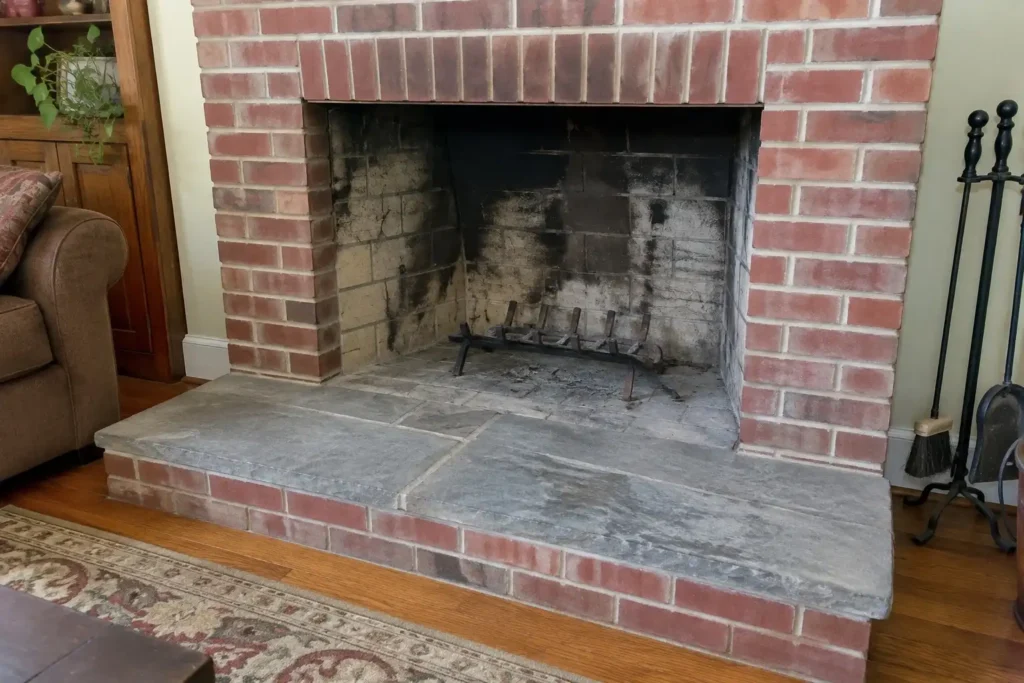
Inside the house, fireplace masonry wears differently. The firebox is lined with firebrick set in heat-resistant refractory mortar. Ordinary mortar breaks down under repeated heating. Typical repairs include replacing cracked firebrick, repointing firebox joints with refractory mortar, and fixing loose or cracked hearth and surround brick or stone.
Building a brand-new fireplace involves venting and code requirements and is a separate project from repair.
How long chimney repairs last
A properly built crown with an overhang and drip edge can last for decades; sealing a hairline crack buys years rather than decades. Repointed chimney joints last a long time once water is kept off the top of the chimney.
What affects the cost of chimney repair
- Chimney height, roof pitch, and access
- Crown sealing vs. full crown replacement
- How much repointing is needed
- Rebuilding above the roofline
- Matching brick
- Cap and flashing work
Chimney maintenance
- Look the chimney over from the ground each spring (binoculars help)
- Keep a cap on the flue
- If you use the fireplace, have it inspected by a chimney professional annually
- Deal with crown cracks while they’re small
- Avoid non-breathable coatings on chimney brick
Related guide
Why winter is hard on chimneys
Chimneys get more freeze-thaw exposure than any other part of the house.
Related services
Tuckpointing & Repointing
Replace crumbling, recessed mortar joints with mortar matched to your brick.
Masonry & Brick Repair
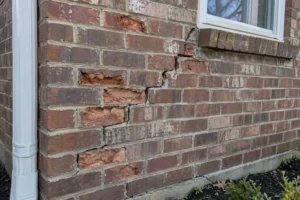
Fix cracked, spalling, and loose brick, block, and stone, and the cause behind it.
Masonry Restoration
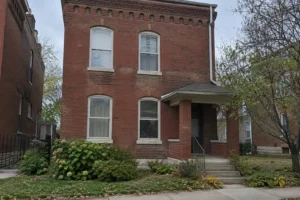
A coordinated plan for aging and historic brick and stone, done with compatible materials.
Questions about chimney repair
Is a cracked chimney crown an emergency?
Not usually, but it lets water into the chimney every time it rains. Fixing it before winter prevents freeze-thaw damage to the brick below.
Can a chimney be repaired without rebuilding it?
Most can. Crown work, repointing, and replacing individual bricks handle the majority of chimney problems. Rebuilding is for brick that's too far gone.
What is fireplace crown repair?
Usually it means chimney crown repair, the slab on top of the chimney. Fireplace repairs inside the house involve the firebox, hearth, and surround.
Why is there water in my fireplace?
Common causes are a cracked crown, missing cap, failing joints, or flashing leaks. An inspection finds which.
Do you clean chimneys or inspect liners?
That's a chimney sweep's work. We handle the chimney masonry: brick, mortar joints, crown, and cap.
Should I waterproof my chimney?
A breathable, masonry-specific water repellent can help on a chimney that's already in good repair. It's not a fix for cracked crowns or open joints, and non-breathable sealers can make spalling worse.
When is the best time to fix a chimney?
Late spring through early fall, so repairs cure before freezing weather. If a crown is cracked, getting it done before winter matters most.
Questions about chimney repair? Call and talk to a mason.
The fastest way to get answers is a phone call. Mon to Sat, 8 AM to 6 PM · Sun, 10 AM to 2 PM
Prefer to write? Send a message
For the quickest answer, call (669) 326-4536. Otherwise, leave your details and we’ll get back to you.
Hours
Mon to Sat, 8 AM to 6 PM
Sun, 10 AM to 2 PM
Mon to Sat, 8 AM to 6 PM
Sun, 10 AM to 2 PM